Apple researchers use neural networks to speed up vector search for RAG
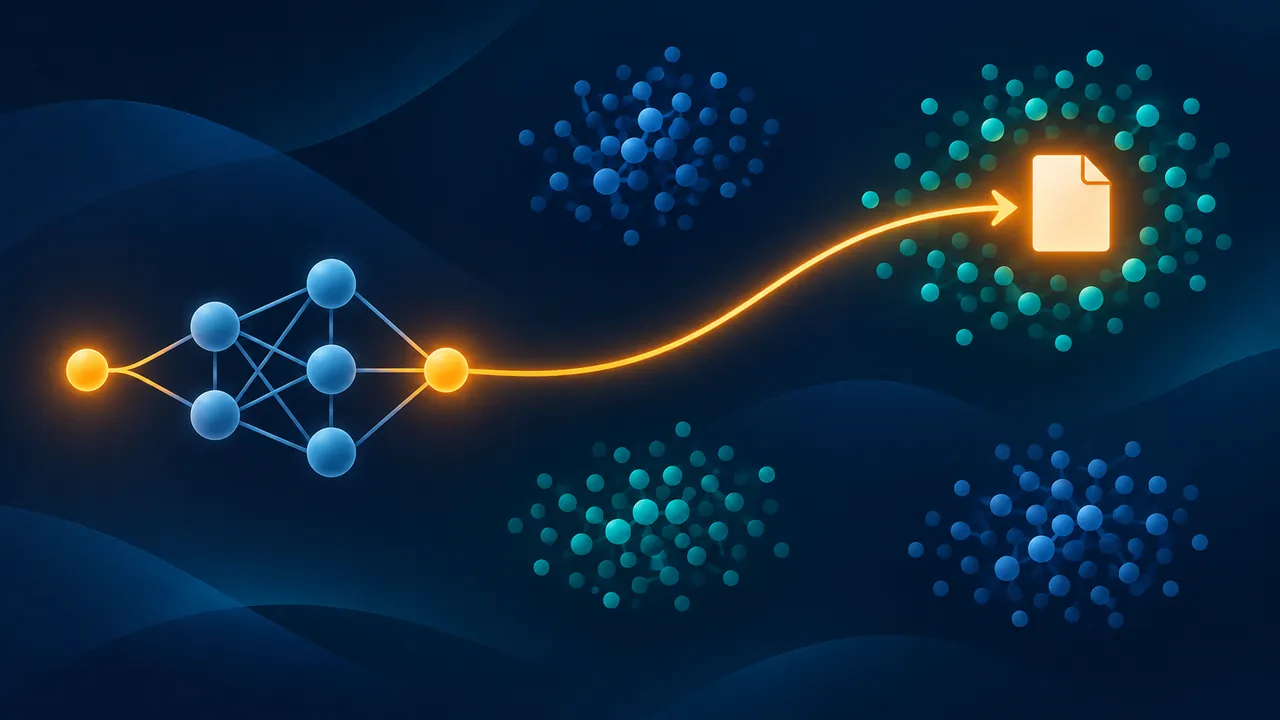
Apple researchers have developed an approach to accelerating maximum inner product search, or MIPS, which underpins recommendation systems, search and retrieval-augmented generation. Their paper, Amortizing Maximum Inner Product Search with Learned Support Functions, was presented at ICML 2026. The method trains small neural networks offline using example queries against a fixed database of key vectors.
The researchers describe two architectures. SupportNet estimates how well the best key inside each cluster matches a query, helping route searches toward promising clusters. KeyNet predicts the best-matching key vector directly and feeds that prediction into an existing inverted file index, or IVF, in place of the original query. Both learn from examples whose correct matches have been calculated through exhaustive search.
SupportNet was tested on Natural Questions using roughly 2.6 million unique passages divided into 128 clusters. The small model reached 95% routing recall in 1.74 milliseconds, compared with 3.36 milliseconds for centroid routing—a speedup of about 1.9 times. Routing recall measures how often the selected clusters include the one containing the exact best match.
In KeyNet tests using a FAISS IVF index, the largest model reached 99% retrieval recall in 0.23 milliseconds, versus 1.8 milliseconds with the original query. These gains come with upfront preparation: training relies on a known query distribution and a fixed key database. The approach shifts computational work into offline training to make subsequent retrieval faster.
Original source: machinelearning.apple.com ↗
Comments on source platforms
Rank is the maximum of the latest discussion counts. These are source metrics.
Hacker News
- Discussion ↗: 38
Measured: 12 Nov 2026, 19:53 UTC