Starlink measurements find matching uplink and downlink channel numbers
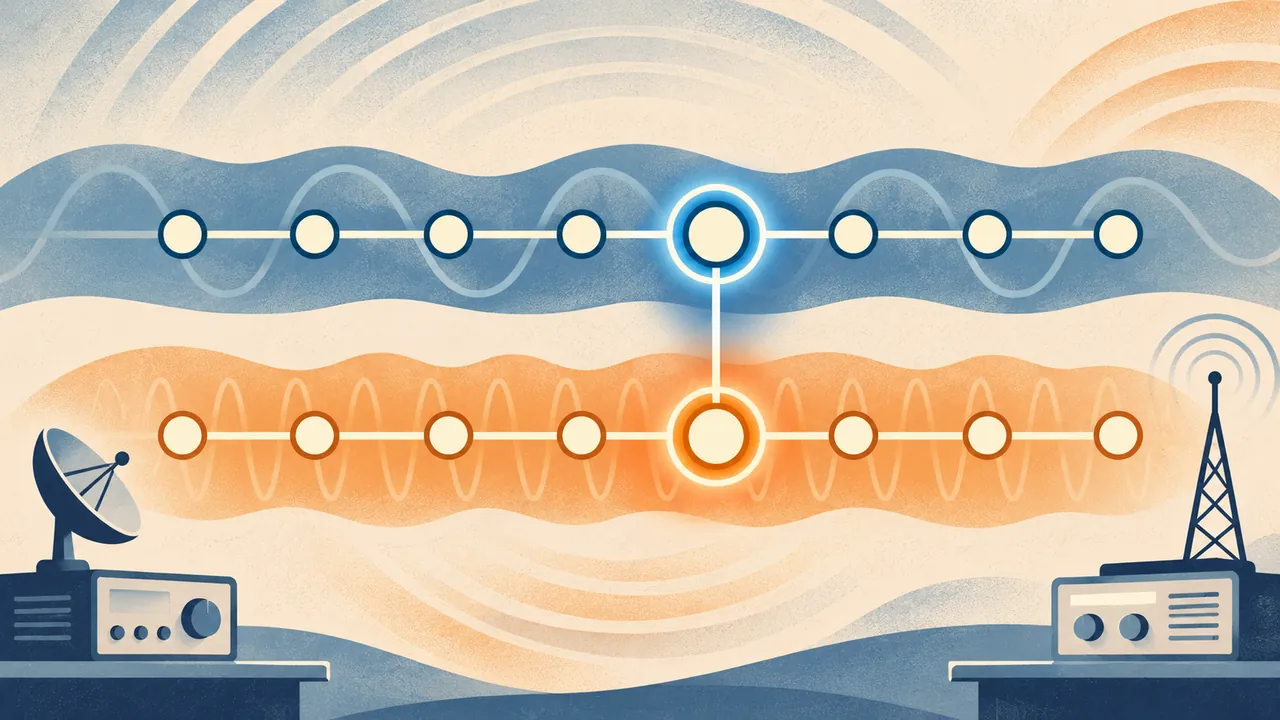
The author of a Starlink radio measurement experiment reports that a terminal consistently selects matching uplink and downlink channel numbers during normal operation, despite their different center frequencies. Two software-defined radios and two satellite LNBs simultaneously monitored terminal transmissions and receiver local-oscillator leakage. No mismatch appeared during ten minutes of visual observation.
The AD9361 measurement system now uses hardware-controlled frequency hopping, increasing its rate from 10,000 to 80,000 hops per second. It switches channels every 12.5 microseconds and scans all eight channels in 100 microseconds. Although the datasheet specifies 20–30 microseconds for settling, the author found 10 microseconds sufficient for stable in-band energy measurements, followed by 2.5 microseconds of integration. These measurements did not assess signal quality, EVM or SNR.
The author also detected transmission signals and receiver oscillator leakage several meters away using an ordinary satellite TV LNB pointed away from the back of the terminal’s antenna. Whether that radiation level is expected remains uncertain. Starting a Starlink speed test made uplink transmissions substantially denser, which the author interpreted as confirmation that the measurements captured terminal activity.
Original source: sdr-x.github.io ↗
Comments on source platforms
Rank is the maximum of the latest discussion counts. These are source metrics.
Hacker News
- Discussion ↗: 4
Measured: 8 Nov 2026, 14:16 UTC