Researchers report remote access flaws in unnamed carmaker’s connected vehicles
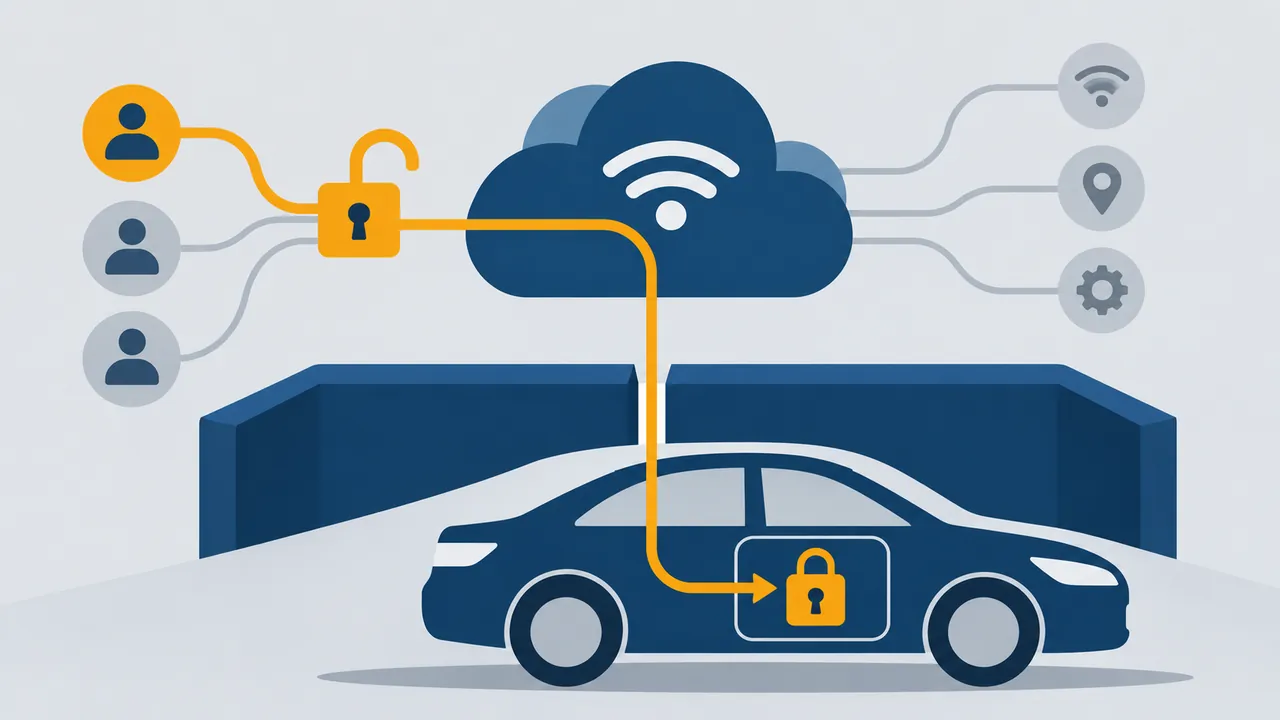
The study’s author and Sam Curry described security flaws in an unnamed automotive group’s connected vehicle platform. They say two exploit chains together allowed remote commands to be sent to any of the manufacturer’s connected vehicles in Australia, the United States and Canada. Testing was conducted on their own cars or vehicles they had permission to examine.
In Australia, the process began with a license plate. Government registration services provided the VIN, which the manufacturer’s APIs could link to a subscriber identifier and personal information. An internet-accessible administration tool exposed APIs that accepted keys embedded in JavaScript without requiring authentication. Another JavaScript bundle contained ForgeRock OpenIDM administrator credentials intended for a staging environment that also worked in production.
The researchers then bypassed web application firewall filtering, allowing them to change users’ passwords through OpenIDM. A separate configuration flaw let them skip multifactor authentication using the ROPC flow and obtain a mobile app token. That token enabled commands including locking and unlocking doors, sounding the horn and starting the engine.
According to the researchers, the Australian chain covered both of the group’s brands and required only a license plate number. They developed a more complex chain for other regions, where OpenIDM systems in the United States, Canada and Europe had stronger protections. Their final claim of successful remote command access covers Australia, the United States and Canada.
Original source: habr.com ↗
Comments on source platforms
Rank is the maximum of the latest discussion counts. These are source metrics.
Хабр
- Discussion ↗: 6
Measured: 18 Nov 2026, 08:58 UTC