Thomas Neumann challenges GenDB-V’s database benchmark gains
Thomas Neumann has questioned the benchmark results of GenDB-V, an AI-generated database system. Its paper reports speedups of 22× to 61× over Umbra and DuckDB and claims full formal verification. Neumann argues that the results demonstrate extensive benchmark overfitting rather than a comparable advantage in conventional query processing.
He points to memory bandwidth as a constraint. At scale factor SF10, the 22 TPC-H queries read roughly 15 GB of compressed base data. Umbra completes them in about 540 milliseconds on a 9950X3D, while reading that amount of data at 54 GB/s alone takes around 280 milliseconds. On that basis, he considers a 22-fold improvement infeasible for traditional query processing.
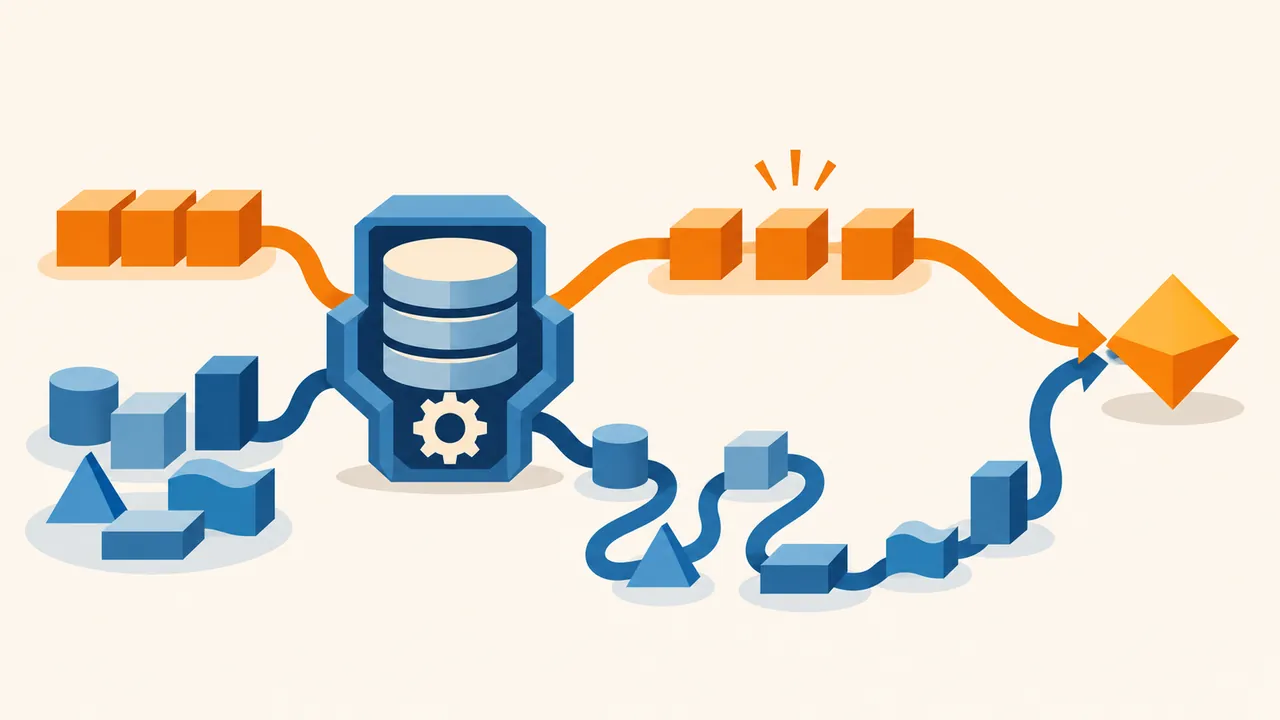
According to Neumann, GenDB-V’s largest gains come from work performed during loading. Agents build auxiliary structures for individual queries and tune the physical data layout to match. One structure, for example, stores supplier rows in a predefined order that makes query Q2 trivial.
The plain-array mode, which reports roughly threefold gains, also draws criticism. Neumann says it embeds assumptions about where the TPC-H generator places particular records. The code checks whether a predicted join partner is correct and otherwise falls back to a slow generic nested-loop implementation. That fallback is not exercised with the official generator in the reported experiments. He warns that deleting a single row or inserting one in the middle could likely trigger the slow path, sharply reducing performance.
Original source: databasearchitects.blogspot.com ↗
Comments on source platforms
Rank is the maximum of the latest discussion counts. These are source metrics.
Hacker News
- Discussion ↗: 13
Measured: 12 Nov 2026, 13:42 UTC