Model estimates widespread satellite failures after an orbital nuclear blast
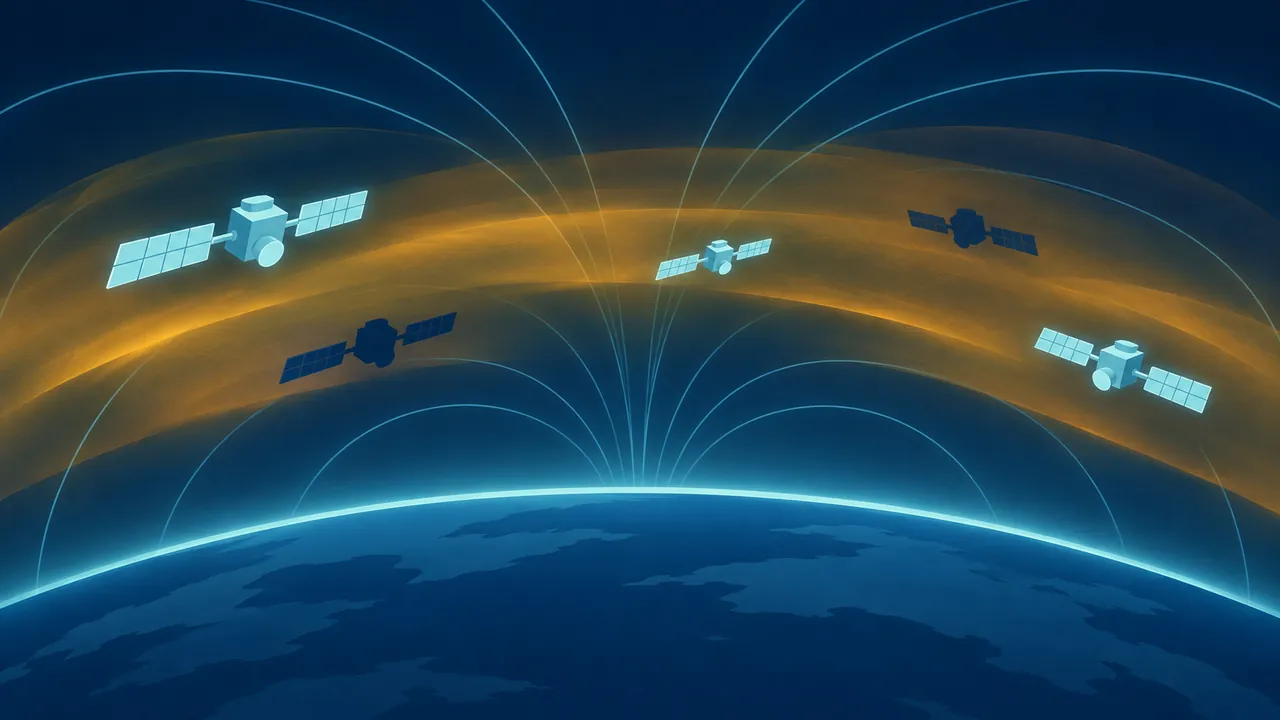
A study submitted to arXiv on November 6, 2026, examines how a nuclear detonation could damage orbital infrastructure. Effects of a Nuclear Detonation in Low Earth Orbit models a 1-megaton explosion at an altitude of 500 kilometers over the South Atlantic. In its central case, repeated radiation belt exposure disables approximately 98% of modeled satellites within one week.
The study reports that more than 13,000 satellites operate in low Earth orbit. Beyond the initial X-ray burst, electrons released by radioactive fission products can become trapped in Earth’s magnetic field. The resulting artificial radiation belt repeatedly exposes spacecraft. The model connects prompt radiation, electron trapping and belt evolution with satellite failures, collisions and atmospheric drag.
Tripling the assumed radiation tolerance delays widespread failures by only days: approximately 97% of modeled satellites are still disabled within two weeks. Losing the ability to maneuver sharply increases collision risk, with around 20 collisions expected within two years.
Atmospheric drag removes many disabled spacecraft from lower altitudes. However, replacement satellites could continue to face radiation and debris for years.
Original source: arxiv.org ↗
Comments on source platforms
Rank is the maximum of the latest discussion counts. These are source metrics.
Hacker News
- Discussion ↗: 85
Measured: 18 Nov 2026, 15:22 UTC